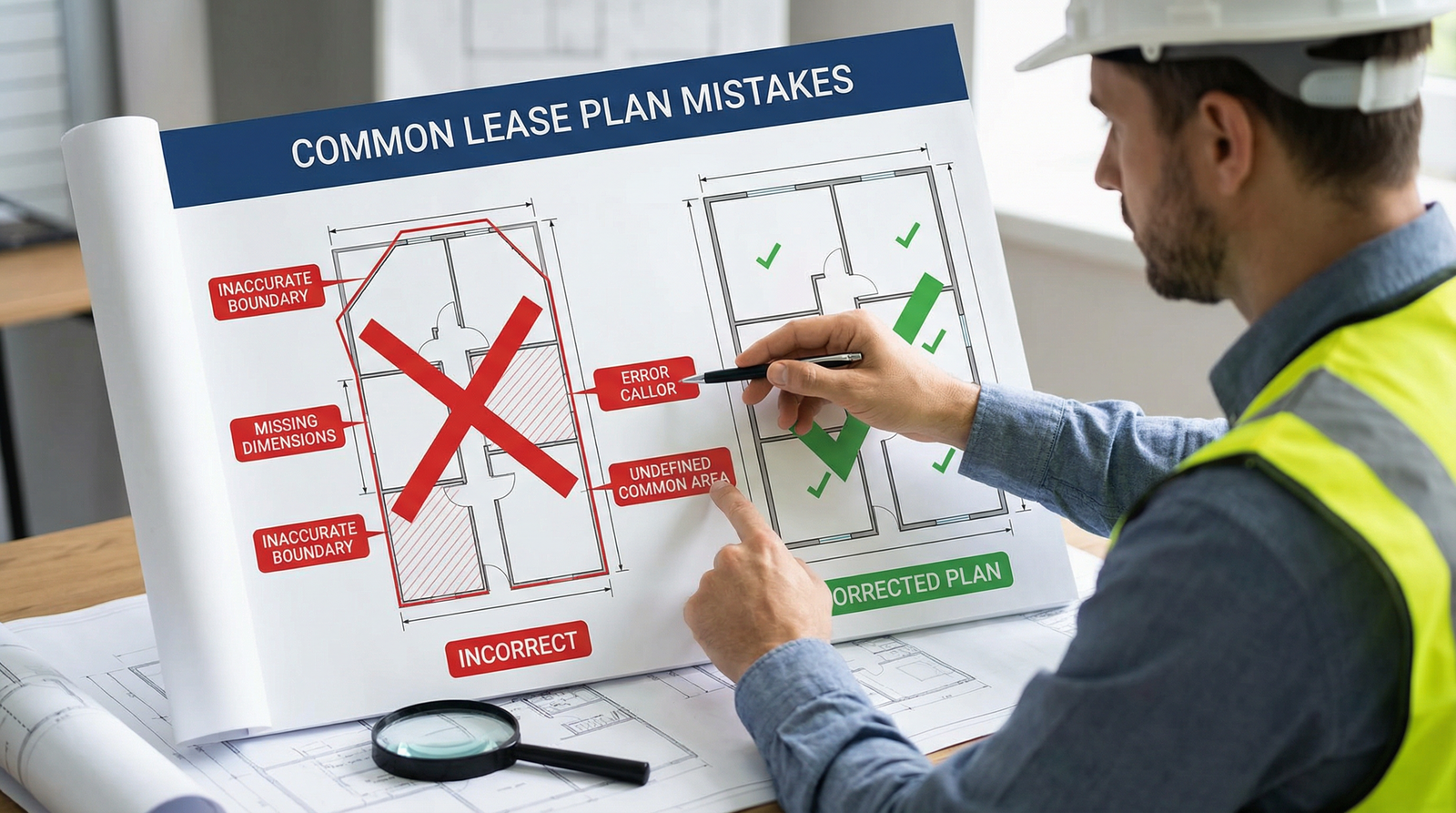
Property transactions involve many moving parts, and lease plans are just one element. However, simple mistakes when commissioning lease plans can cause significant delays and extra costs. As experienced chartered surveyors, we've seen these mistakes repeatedly. Learn what to avoid so your property transaction proceeds smoothly.
Mistake 1: Waiting Too Long to Commission the Survey
Many buyers wait until close to completion before thinking about the lease plan. Then they discover the surveyor needs access to the property, which takes time to arrange. The survey itself takes time. Plan production takes time. Suddenly, completion is delayed because the lease plan isn't ready.
Solution: Commission your lease plan as soon as your solicitor confirms you need one. Most professional surveyors can complete the work within a week, but don't leave it until the last minute. Property chains can collapse when one element causes delays.
Mistake 2: Choosing Based on Price Alone
The cheapest quote might seem attractive, but what if that surveyor lacks experience? What if their plan gets rejected by the Land Registry? You'll pay twice – once for the failed plan, again for a professional replacement. Plus, you'll face delays that might jeopardize your purchase.
Solution: Choose chartered surveyors with professional accreditations (RICS, CIOB, RPSA). Ask about their Land Registry acceptance rate. Check reviews and references. A slightly higher fee from experienced professionals is cheaper than paying for amateur work twice.
Mistake 3: Not Providing Complete Information
Surveyors need information to produce accurate plans. If you don't tell them about the garden shed included in your lease, or the parking space around the back, these might not appear on the plan. Then the plan doesn't match your lease document, causing problems with Land Registry registration.
Solution: When commissioning your survey, provide complete information about everything included in your lease. Show the surveyor your lease draft if possible. Mention any outdoor spaces, parking areas, storage, or shared facilities. More information is better than too little.
Mistake 4: Assuming DIY Plans Will Work
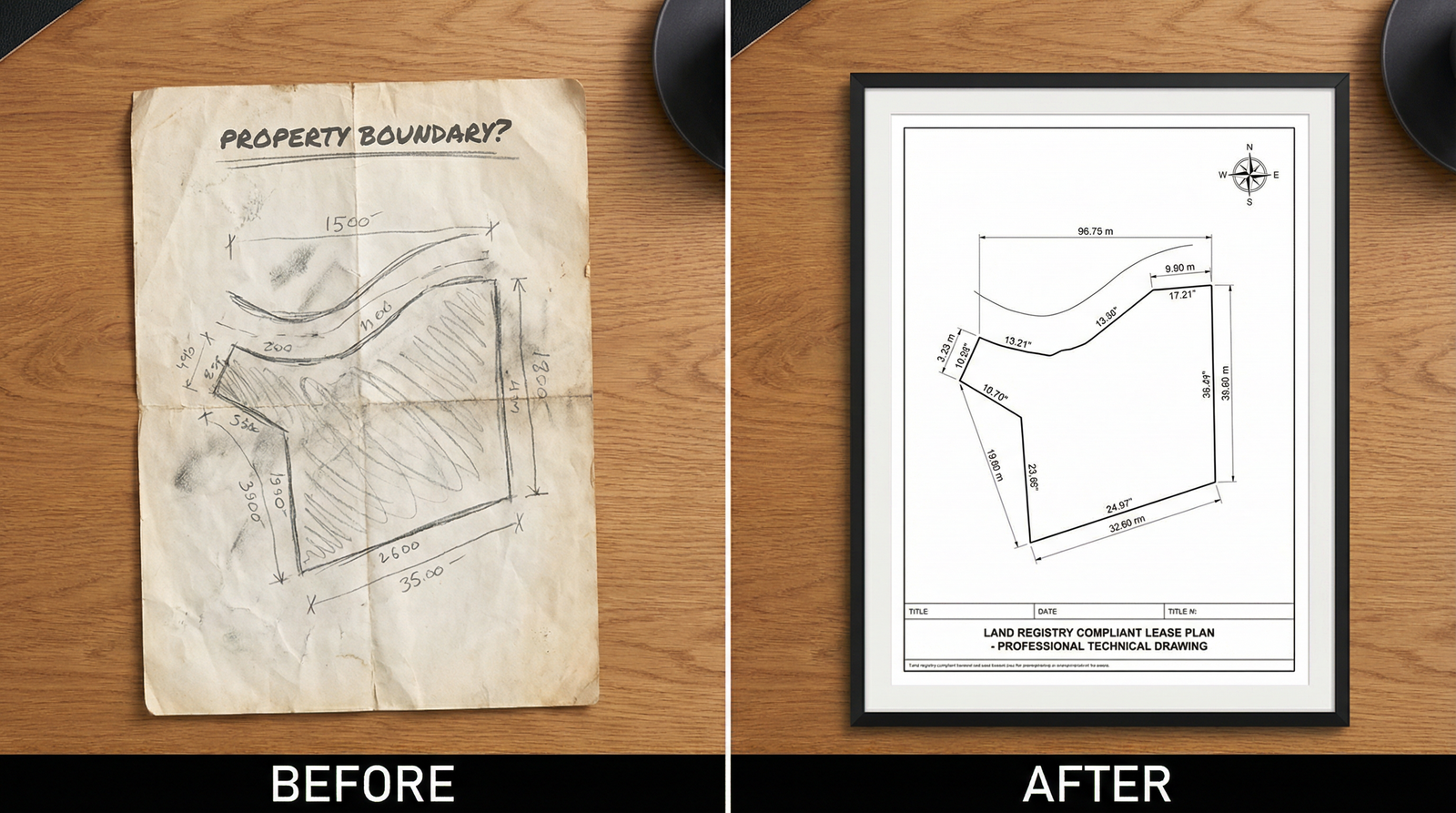
Some people think they can measure their property and draw a lease plan themselves. Maybe you're handy with design software or good at drawing. Unfortunately, amateur plans usually fail Land Registry compliance checks. Requirements are technical and specific. Unless you're a professional surveyor, you'll likely miss something crucial.
Solution: Use professional chartered surveyors from the start. Yes, it costs money, but it's a necessary expense for legal property registration. DIY plans almost always end up costing more because you pay for the failed attempt plus the professional replacement.
Mistake 5: Ignoring Access Arrangements
Surveyors need to measure inside your property. If you don't arrange access properly, the surveyor makes a wasted trip. Rescheduling delays the whole process. Meanwhile, your completion date approaches and your lease plan isn't progressing.
Solution: Coordinate access carefully with your estate agent, the current owner, and your surveyor. Confirm who will provide access, ensure they have keys, and verify the appointment. A little coordination prevents major delays.
Mistake 6: Not Understanding What You're Buying
Some buyers don't carefully review their lease terms before commissioning the survey. They assume certain areas are included when they're actually shared or excluded. The surveyor produces a plan based on the lease terms, then the buyer discovers they're not getting what they thought.
Solution: Read your lease document carefully before commissioning the survey. Understand exactly what's included in your leasehold interest. If anything is unclear, ask your solicitor to explain. Make sure the surveyor knows to document what the lease actually includes, not what you wished it included.
Mistake 7: Skipping the Brief Check
After receiving the finished lease plan, some buyers don't review it before their solicitor submits it to the Land Registry. Later, they notice the plan shows their parking space in the wrong location, or the balcony dimensions look odd. By then, it might be registered incorrectly.
Solution: When you receive the draft lease plan, review it carefully with your solicitor. Check that all areas you expect to see are shown correctly. Verify measurements seem reasonable. If anything looks wrong, raise it with your surveyor before the plan goes to the Land Registry.
Mistake 8: Forgetting About Shared Facilities
Leasehold properties often include rights to use shared facilities – communal gardens, shared hallways, joint access drives. If your lease plan doesn't document these rights of way and shared areas, you might have trouble proving your rights to use them in future.
Solution: Make sure your surveyor understands all shared facilities included in your lease. Communal areas, shared access routes, parking arrangements, and use rights should all be documented on your lease plan. Tell your surveyor about everything your lease gives you rights to use.
Mistake 9: Ignoring Professional Advice
Sometimes surveyors identify issues during their site visit. Maybe your property's physical boundaries don't match the lease description. Perhaps there's a structural feature that complicates boundary definition. If you ignore these professional observations, problems might emerge after completion when you own the property.
Solution: Listen when surveyors raise concerns. If they identify discrepancies between physical reality and lease documents, address these issues before completion. Your solicitor can negotiate with the seller to resolve problems. It's much easier to fix issues before you've bought the property than afterwards.
Mistake 10: Not Keeping Copies
Your lease plan is an important legal document. You'll need it if you ever sell the property, extend your lease, or resolve any disputes about boundaries or rights. Some people receive their lease plan, it gets registered with the Land Registry, and they forget to keep their own copy. Years later, they need it but can't find it.
Solution: Keep digital and physical copies of your lease plan with your other property documents. Store them safely with your lease, title deeds, and insurance documents. Consider giving copies to your solicitor for safe keeping. Future you will be grateful when you need that plan years later.
Additional Tips for Success
Communicate Clearly
Good communication prevents most problems. Talk to your surveyor, explain your situation, ask questions if anything is unclear. Professional surveyors want to deliver plans that meet your needs – help them by communicating openly.
Build in Time Buffers
Even with professional surveyors, unexpected issues can arise. The property might have more complex boundaries than initially apparent. Access might be delayed. Build time buffers into your transaction timeline so minor delays don't cascade into major problems.
Work with Your Solicitor
Your solicitor coordinates the legal aspects of your purchase. They should review the lease plan before it goes to the Land Registry. Work collaboratively with both your solicitor and surveyor – they're both working toward successful completion of your purchase.
Ask About Guarantees
Professional surveyors stand behind their work. If the Land Registry rejects a plan due to surveying errors, good surveyors fix it at no additional cost. Ask about this when choosing your surveyor. It's part of professional service.
What to Do If Things Go Wrong
Despite best efforts, sometimes issues arise. If your lease plan gets rejected by the Land Registry, don't panic. Professional surveyors will work with you to identify the problem and produce a corrected plan. If rejection resulted from surveying error, it should be fixed at no extra cost. If it resulted from unclear lease terms or missing information you didn't provide, you might need to pay for revisions.
If delays threaten your completion date, communicate immediately with all parties. Your estate agent, solicitor, seller, and mortgage lender all need to know. Often, completion can be pushed back slightly to accommodate necessary work. Early communication prevents collapsed deals.
The Cost of Mistakes
Small mistakes with lease plans can have expensive consequences. Delayed completions might mean:
- Lost mortgage offers if rates expire
- Extra fees for solicitor work
- Penalty charges if you miss moving dates
- Collapsed property chains if sellers get fed up
- Double payment for lease plans if amateur ones fail
Preventing mistakes by working with professional surveyors and following good practices saves significant money and stress.
Conclusion
Commissioning a lease plan doesn't have to be complicated. Avoid these common mistakes and you'll find the process straightforward. Work with professional chartered surveyors, communicate clearly, provide complete information, and review the finished plan carefully. These simple steps ensure your lease plan supports smooth property completion without delays or problems.
Remember: your lease plan is a long-term legal document. Taking time to get it right at the beginning prevents issues that might emerge years later when you sell, extend your lease, or face boundary questions.
For professional lease plan services that avoid these common pitfalls, get in touch with our experienced team. We guide clients through the process, explain what's needed, and deliver Land Registry compliant plans that support successful property transactions.
Get Your Lease Plan Done Right First Time
Our chartered surveyors help you avoid these common mistakes. Clear communication, professional expertise, and a 98% first-time Land Registry acceptance rate.
Commission Your Lease Plan