
If you're buying a leasehold property or setting up a new lease, you'll need a Land Registry compliant lease plan. But what exactly does that mean, and why is compliance so important? As experienced chartered surveyors who produce hundreds of compliant lease plans each year, we're here to explain everything you need to know.
What Is a Land Registry Compliant Lease Plan?
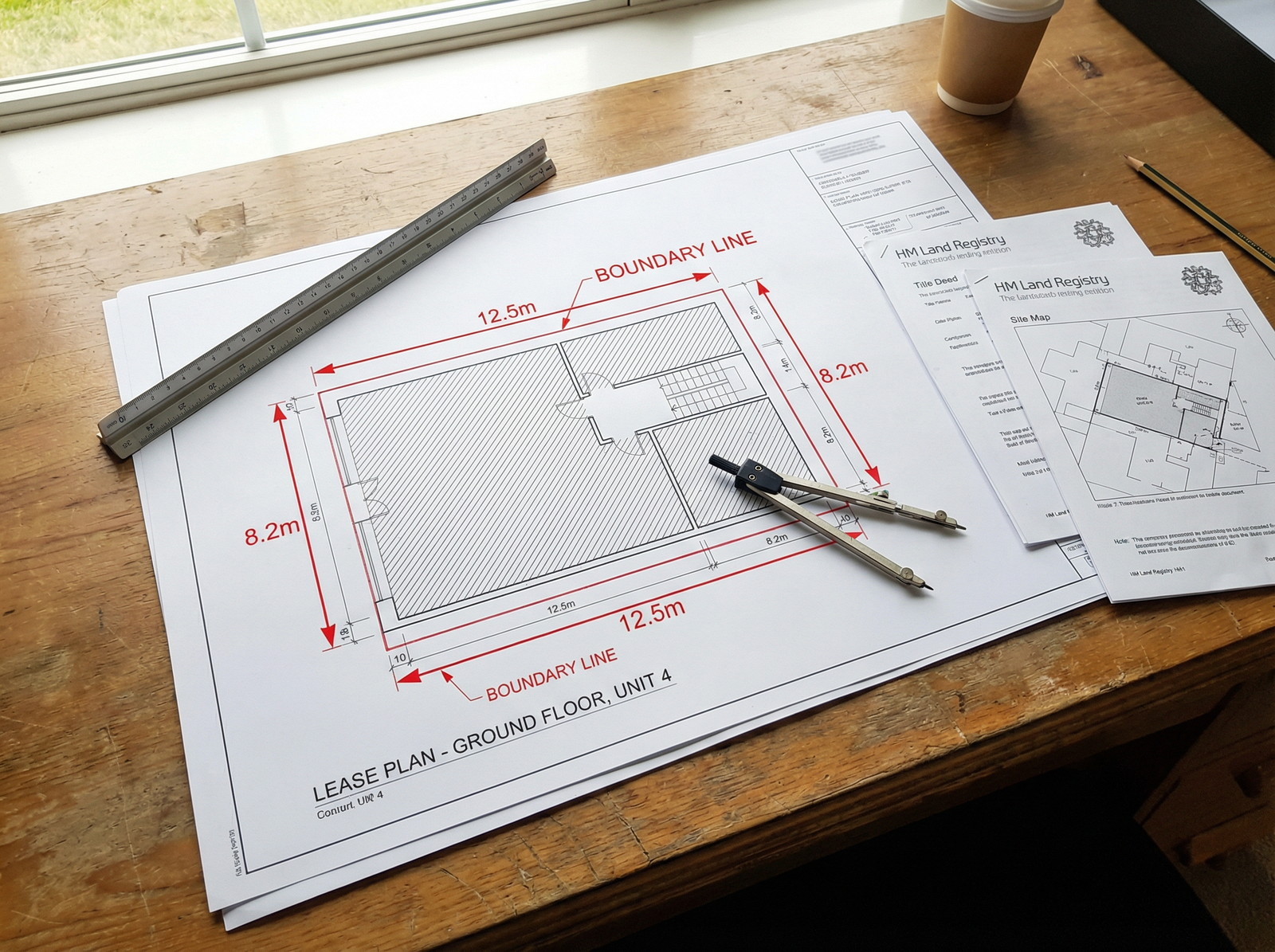
A lease plan is a legal document that shows the exact area being leased within a property. Think of it as a map that clearly defines which part of a building or land you're leasing. Whether you're renting a flat in a converted house or leasing commercial space in an office building, your lease plan must show precisely what's included in your lease.
The term "Land Registry compliant" means the plan meets all the specific requirements set by the Land Registry under the Land Registration Act 2002. This isn't just a nice-to-have – it's a legal requirement. Without a compliant plan, your lease cannot be registered with the Land Registry, which could prevent or seriously delay your property transaction.
The Land Registry has strict requirements for lease plans because they form part of permanent legal records. These plans must be clear enough that anyone looking at them in 50 or 100 years can understand exactly what area the lease covers. That's why professional expertise from experienced surveyors is so important.
Essential Requirements for Land Registry Compliance
Creating a Land Registry compliant lease plan isn't as simple as drawing a sketch. The Land Registry has specific technical requirements that must be met. Here are the key elements every compliant lease plan must include:
1. Accurate Scale
Your lease plan must be drawn to an accurate scale – typically 1:500 for urban properties or 1:1250 for larger sites. The scale isn't just a number; it determines whether the Land Registry can properly identify the property boundaries on their systems. Our experienced team uses professional measured surveys and laser scanning technology to ensure every measurement is precise to the millimetre.
2. Clear Property Boundaries
The plan must show clear property boundaries that define where your leased area starts and ends. Vague lines or approximate boundaries won't be accepted. This is particularly important in buildings with multiple flats or commercial properties with shared spaces. Professional surveyors use site surveys to identify exact boundaries, including walls, fences, and other physical features that define your leased area.
3. The Demise of the Lease
In surveying terms, "demise" means the extent of the leased property. Your lease plan must clearly show what's included – is it just the interior space, or does it include external areas like balconies, gardens, or parking spaces? Does it include outbuildings? The demise must be marked clearly, often using different colours or hatching to distinguish your leased area from communal spaces or other properties.
4. North Point
Every compliant lease plan needs a north point – the arrow showing which direction is north. This seems simple, but it's crucial for orienting the plan correctly on Land Registry systems. The north point helps land registration officers understand the plan's orientation relative to their mapping data.
5. Access Points and Rights of Way
If your lease includes rights of way (like access through a shared hallway or drive across someone else's land), these must be clearly marked on the plan. Access points show how you reach your leased area. Missing or unclear rights of way documentation is one of the most common reasons the Land Registry rejects lease plans.
6. Title Reference
The plan should reference the property's title number if it's already registered with the Land Registry. This helps land registration officers match your new lease plan with existing property records.
Why Professional Expertise Matters
You might wonder: can't I just draw a plan myself or use an architect who's already working on my property? While it's technically possible, the reality is that amateur lease plans often fail Land Registry checks. Here's why professional lease plan surveyors make a difference:
Understanding Land Registry Requirements
The Land Registry updates its requirements regularly, and there are nuances that only experienced professionals understand. For example, the level of detail required varies depending on whether you're registering a residential or commercial lease. Our team stays current with all Land Registry guidance and has direct experience of what does and doesn't get accepted.
Accurate Measurement Technology
Professional surveyors use laser scanning and measured survey equipment that provides millimetre-accurate measurements. This level of precision simply isn't achievable with a tape measure and estimation. When property boundaries need to be legally defined, accuracy isn't optional.
First-Time Acceptance Rate
Our team has a 98% first-time acceptance rate with the Land Registry. That means when we produce lease plans, they're accepted without requiring amendments or resubmission. This saves you time and prevents delays in your property transaction. When you're working to tight completion deadlines, this reliability is invaluable.
Understanding Complex Situations
Some properties present unique challenges. Perhaps your flat includes a loft space that's separate from the main living area. Maybe your commercial lease includes specific parking spaces in a shared car park. Our experienced professionals understand how to document these complex situations in ways the Land Registry accepts.
The Process of Creating Your Compliant Lease Plan
Understanding what's involved helps you know what to expect. Here's how professional lease plan surveyors create your compliant plan:
Step 1: Initial Consultation
We start by discussing your specific requirements. What property are you leasing? Are there any unique features or specific requirements in your lease document? This conversation helps us understand exactly what needs to be shown on your plan. We'll provide a transparent quotation that explains what's included.
Step 2: Site Survey
Our chartered surveyors visit your property to conduct a thorough site survey. Using professional laser scanning equipment and traditional surveying techniques, we measure every relevant dimension. We identify property boundaries, check access points, document any rights of way, and note any features that need to be included in your lease plan.
This site survey typically takes 1-2 hours depending on the property's size and complexity. You or a representative should be available to provide access, though we can sometimes work with key access if you can't attend personally.
Step 3: Plan Production
Back in our office, our experienced team uses the survey data to create your lease plan. We draw the plan to the correct scale, mark all boundaries accurately, add the north point, document rights of way and access points, and ensure every Land Registry requirement is met. We use professional surveying software that's designed specifically for producing Land Registry compliant plans.
Step 4: Quality Checking
Before sending your plan to you, we conduct thorough quality checks. Multiple team members review each plan to ensure compliance. We check measurements, verify that all required elements are present, confirm the scale is correct, and ensure the plan is clear and easy to understand. This quality control process is why our plans have such high acceptance rates.
Step 5: Delivery
We deliver your compliant lease plan in the formats you need – typically PDF for your solicitor and sometimes CAD files if required. Your plan is ready to submit with your lease application to the Land Registry. The whole process, from site survey to delivery, typically takes 48-72 hours, though we can accommodate urgent requests when needed.
Common Problems With Non-Compliant Plans
We've seen countless examples of lease plans that failed Land Registry checks. Understanding common problems helps you avoid them:
Incorrect or Missing Scale
Many amateur plans either have no scale or use an inappropriate scale. If your plan isn't drawn to one of the Land Registry's accepted scales, it will be rejected. Even if a scale is stated, if the measurements don't match that scale when the Land Registry checks, you'll need a new plan.
Vague Boundaries
Phrases like "approximately" or "about" have no place in lease plans. The Land Registry needs precise boundaries. We've seen plans rejected because boundaries were described as "the approximate line of the party wall" rather than precisely measured and drawn.
Missing North Point
It sounds simple, but forgetting to include a north point is surprisingly common. Without it, the Land Registry can't properly orient your plan within their system.
Inadequate Rights of Way Documentation
Many plans fail to properly document access rights and rights of way. If you need to walk through a shared hallway to reach your flat, that right must be clearly shown and explained on your lease plan. Simply drawing an arrow isn't enough – the plan needs proper documentation.
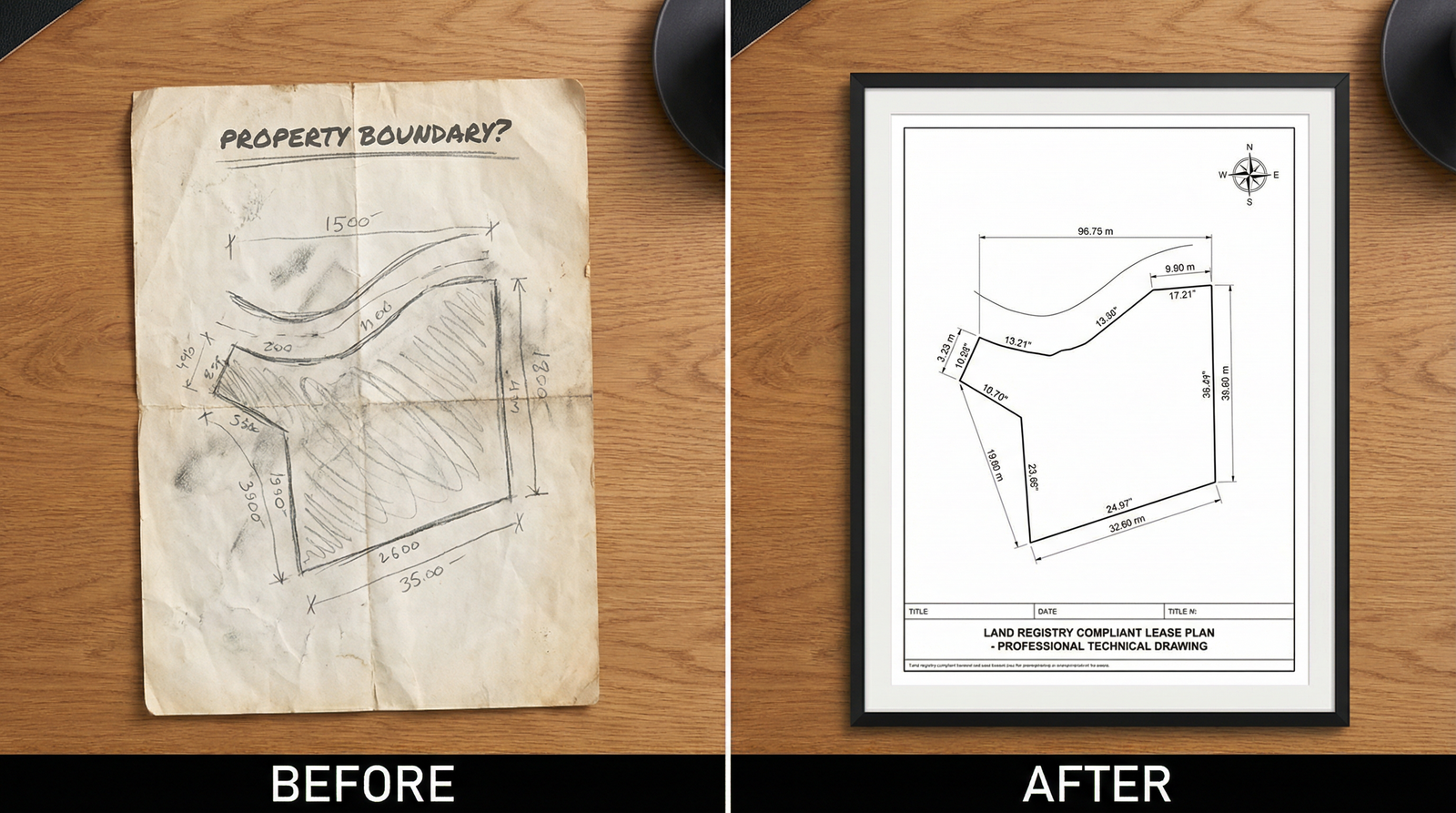
Poor Quality or Unclear Drawings
The Land Registry needs plans that are crystal clear. Fuzzy scans, hand-drawn sketches that are hard to read, or plans with ambiguous markings will be rejected. Professional surveying software creates plans that meet the Land Registry's quality standards.
Residential vs Commercial Lease Plans
While the fundamental requirements are the same, residential and commercial lease plans have some differences:
Residential Lease Plans
For residential properties like flats and houses, lease plans typically need to show the internal layout clearly, any private external areas (balconies, gardens, parking), communal areas you have rights to use, and any shared access routes. Residential plans are usually straightforward, though properties in converted houses can be more complex.
Commercial Lease Plans
Commercial property lease plans often involve more complexity. They might need to show specific parking allocations, loading bay access, plant room locations, signage rights, and precise floor space measurements. Commercial landlords also often require detailed plans showing exactly where partition walls, facilities, and service areas are located. Our team has extensive experience with retail units, office spaces, industrial premises, and mixed-use commercial properties.
The Cost of Non-Compliance
What happens if your lease plan isn't compliant? The consequences can be significant:
Delayed Transactions: If the Land Registry rejects your lease plan, you'll need to commission a new one. This adds weeks to your property transaction and could jeopardize your purchase or lease agreement.
Additional Costs: You'll have paid for the non-compliant plan, and you'll need to pay again for a proper one. Professional lease plan surveyors might seem more expensive initially, but they're cheaper than paying twice.
Legal Issues: Without a registered lease, your legal position is compromised. You might face problems proving your leasehold rights or selling the property in future.
Mortgage Problems: Many mortgage lenders won't release funds until the lease is properly registered. A rejected lease plan can therefore prevent you from completing your purchase.
How to Choose the Right Lease Plan Surveyor
Not all surveyors are equal when it comes to producing Land Registry compliant lease plans. Here's what to look for:
Proper Accreditations
Choose surveyors who are members of professional bodies like RICS (Royal Institution of Chartered Surveyors), CIOB (Chartered Institute of Building), or RPSA (Residential Property Surveyors Association). These accreditations demonstrate professional expertise and adherence to ethical standards.
Proven Experience
Ask about their experience specifically with lease plans. How many do they produce each year? What's their first-time acceptance rate with the Land Registry? Our team produces hundreds of compliant lease plans annually and maintains a 98% first-time acceptance rate.
Clear Process and Turnaround Times
Professional surveyors should explain their process clearly and commit to realistic turnaround times. Be wary of surveyors who promise instant results – quality lease plans require proper site surveys and careful preparation.
Transparent Pricing
You should receive a clear quotation upfront with no hidden fees. Professional surveyors will explain what's included and any potential additional costs before you commit.
Conclusion: The Value of Compliance
A Land Registry compliant lease plan is not just a box-ticking exercise – it's a crucial legal document that protects your property rights. While it might be tempting to cut corners or try to save money with amateur plans, the risks of rejection far outweigh any initial savings.
Professional lease plan surveyors bring expertise, accuracy, and reliability. With our 98% first-time acceptance rate and average 48-hour turnaround, we help property transactions proceed smoothly without delays or complications.
Whether you're buying a residential flat or leasing commercial property, investing in a professionally produced, Land Registry compliant lease plan ensures your transaction completes without hitches. It's one of those situations where doing it right the first time really does save time, money, and stress.
If you need a Land Registry compliant lease plan, get in touch with our experienced team. We'll discuss your requirements, provide a transparent quotation, and deliver a compliant plan that the Land Registry accepts first time. View our full range of professional surveying services.
Need a Land Registry Compliant Lease Plan?
Our chartered surveyors are ready to help. With professional expertise, cutting-edge laser scanning technology, and a 98% first-time acceptance rate, we deliver compliant lease plans you can trust.
View Our Lease Plan Services