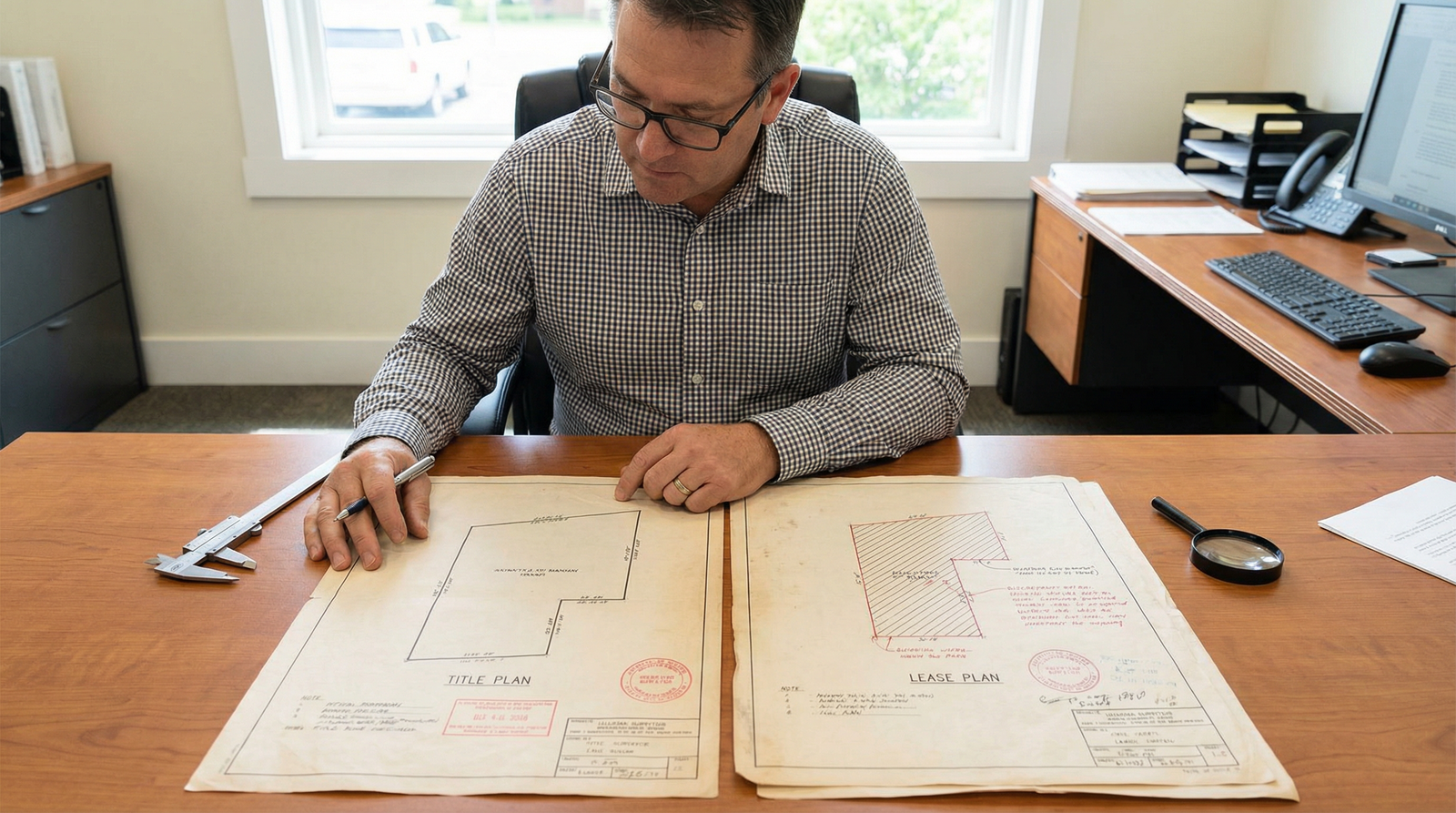
Many property buyers and sellers confuse title plans with lease plans. While both are important property documents registered with the Land Registry, they serve different purposes and show different information. As experienced chartered surveyors, we clarify these differences to help you understand which plan you need and when.
What Is a Title Plan?
A title plan shows the extent of a registered freehold or leasehold property as recorded with the Land Registry. Think of it as the "official map" of what you own. When you buy a freehold property like a house, the title plan shows your entire property including the building, garden, driveways, and any other land within your ownership.
Title plans are based on Ordnance Survey maps. The Land Registry marks the property boundary with a red edge on the plan. This boundary shows the general extent of your property, though under the "general boundary rule," it's not precisely fixed to the millimeter.
Every registered property in England and Wales has a title plan. When you purchase property, your solicitor obtains a copy of the title plan as part of the conveyancing process. This plan remains the same unless you change your property's boundaries (like buying adjacent land or selling part of your garden).
What Is a Lease Plan?
A lease plan shows the specific area being leased within a larger property. When a building contains multiple flats, each flat needs a lease plan showing exactly which part of the building that lease covers. Unlike title plans which show entire properties, lease plans show subdivisions within properties.
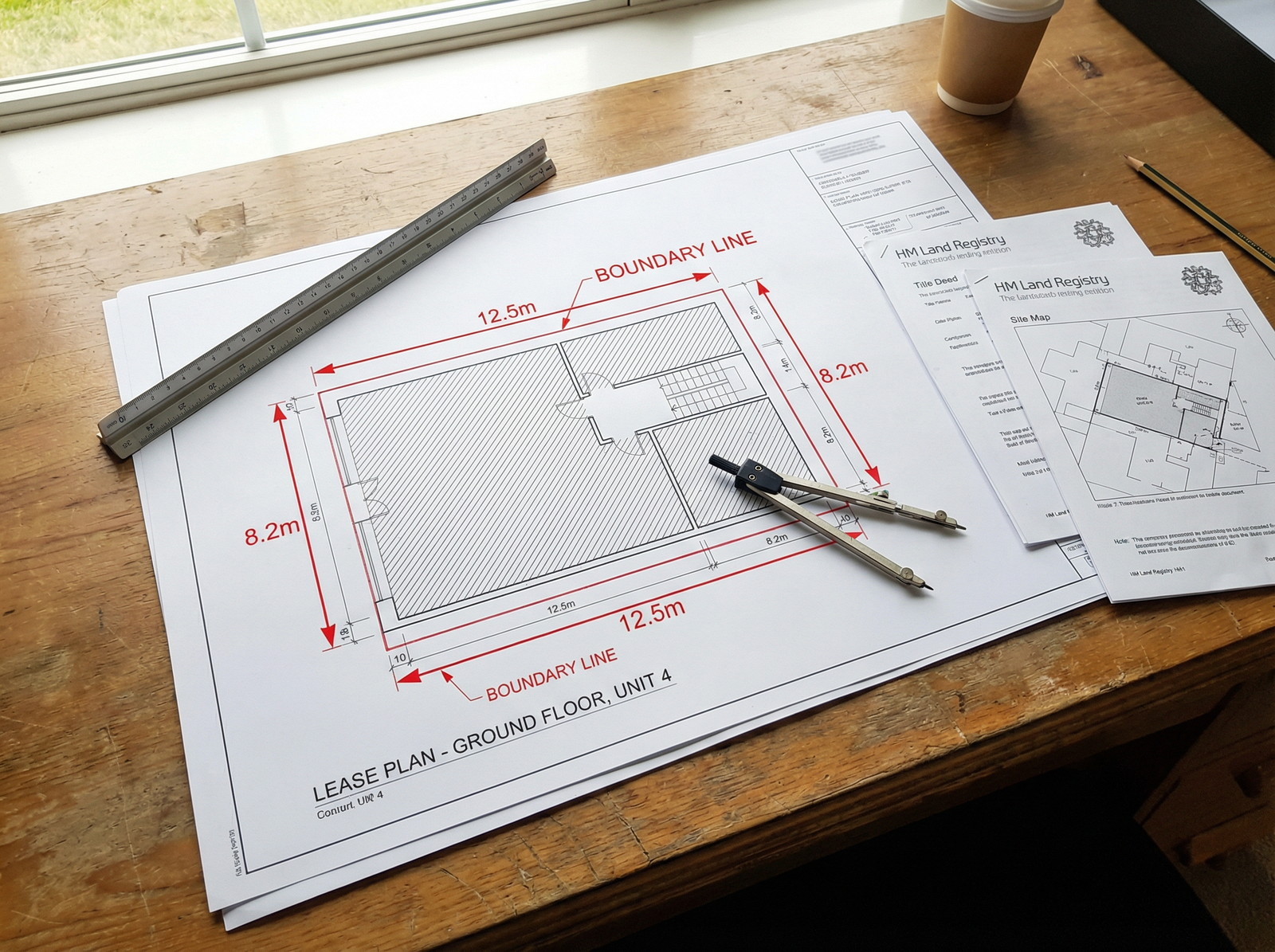
Lease plans are more detailed than title plans. They must show the internal layout, exact boundaries between leased areas, shared spaces and access routes, any outdoor areas included in the lease, and specific features like parking spaces or storage areas.
Lease plans must meet stricter requirements than title plans because they define legal boundaries within buildings where multiple parties have interests. They must be drawn to accurate scale with proper measurements, not just general positions on an Ordnance Survey map.
Key Differences Explained
Purpose
Title Plans: Show the extent of registered property ownership
Lease Plans: Show the specific area leased within a property
When You Need Them
Title Plans: Created when a property is first registered with the Land Registry, typically when it's first sold or when voluntary registration occurs. Once created, the same title plan continues unless boundaries change.
Lease Plans: Created when a new lease is established, such as when a house is converted into flats, when extending a lease that requires re-registration, or for new build developments with leasehold properties.
Level of Detail
Title Plans: Show general boundaries based on Ordnance Survey maps. Less detailed, showing just the outline of the property.
Lease Plans: Show precise measurements, internal layouts, and detailed boundaries. Much more technical and detailed than title plans.
Accuracy Requirements
Title Plans: Follow the "general boundary rule" – boundaries shown to within a few centimeters of actual position.
Lease Plans: Require precise measurements to professional surveying standards. Must show accurate scale and detailed property boundaries.
Who Creates Them
Title Plans: Created by the Land Registry based on Ordnance Survey mapping.
Lease Plans: Created by chartered surveyors through professional site surveys and measured surveys.
Real-World Examples
Example 1: Buying a House
You're buying a freehold house. The property has a title plan registered with the Land Registry showing the house and garden. You don't need a lease plan because you're not leasing – you're buying the freehold. Your solicitor will provide you with a copy of the title plan as part of your purchase documents.
Example 2: Buying a Flat
You're buying a flat in a converted Victorian house. The building was converted five years ago, and each flat already has a registered lease. You don't need a new lease plan because previous owners already created lease plans when the conversion happened. However, you will receive a copy of the lease plan for your specific flat showing exactly which part of the building your lease covers.
Example 3: Converting a House into Flats
You own a house with a title plan showing your freehold ownership. You're converting it into three flats to sell as leasehold properties. You'll need three new lease plans – one for each flat – showing precisely which part of the building each lease covers. Your original title plan continues to exist, showing your freehold ownership of the entire building. The lease plans subdivide that ownership into leasehold interests for each flat.
Can One Property Have Both?
Yes, absolutely. In fact, most leasehold properties do. Consider a block of flats:
- The entire building has a freehold title plan showing the building's extent
- Each individual flat has a lease plan showing which part of the building that specific lease covers
- Each flat also has its own leasehold title plan registered at the Land Registry
So you might have one freehold title plan for the building, and 20 leasehold title plans and 20 lease plans for the 20 flats within it. They all work together to create a complete picture of ownership and occupation rights.
Common Misconceptions
Misconception 1: "I Have a Title Plan, So I Don't Need a Lease Plan"
Not true if you're creating or registering a new lease. The title plan shows overall property extent, but a new lease requires a detailed lease plan showing the leased area within that property.
Misconception 2: "Lease Plans and Title Plans Show the Same Thing"
No. Title plans are general boundary representations based on Ordnance Survey maps. Lease plans are detailed, to-scale technical drawings created from professional surveys. The level of detail and accuracy differs significantly.
Misconception 3: "I Can Use the Title Plan as a Lease Plan"
Generally no. Title plans rarely meet the detailed requirements for lease plans. When registering a new lease, the Land Registry requires a proper lease plan meeting their specific criteria.
When Do You Need Professional Surveyors?
You need professional chartered surveyors for lease plans. Title plans are produced by the Land Registry, so you don't commission them separately. However, if you're creating new leases (converting property, extending leases that require re-registration, developing new leasehold properties), you need surveyors to produce compliant lease plans.
Professional surveyors conduct site surveys, measure properties accurately, create detailed technical drawings, ensure Land Registry compliance, and coordinate with solicitors and property professionals. Don't try to create lease plans yourself or use amateur solutions. The Land Registry frequently rejects non-professional plans, causing delays and additional costs.
The Cost Difference
Title plans are free as part of Land Registry services (though you pay general Land Registry fees for property registration). Lease plans cost money because they require professional surveying services. Expect to pay £300-£800 for a residential lease plan, more for complex or commercial properties.
While this is an additional cost, it's essential for legally registering leases. Think of it as property transaction insurance – ensuring your legal documentation is correct and complete.
Conclusion
Title plans and lease plans serve different purposes in property ownership. Title plans show overall property extent registered with the Land Registry. Lease plans show detailed subdivisions of properties into leasehold interests. Understanding the difference helps you know what documentation you need for your property transaction.
If you're creating new leases or buying property that requires a new lease plan, work with professional chartered surveyors. If you just need to understand your existing title plan, your solicitor can help explain what it shows.
For lease plan services from experienced professionals, get in touch with our team. We produce Land Registry compliant lease plans for residential and commercial properties throughout the UK.
Need a Lease Plan or Confused About Your Title Plan?
Our chartered surveyors provide expert advice and professional lease plan services. We'll explain what you need and deliver plans that meet Land Registry requirements.
Speak to Our Team