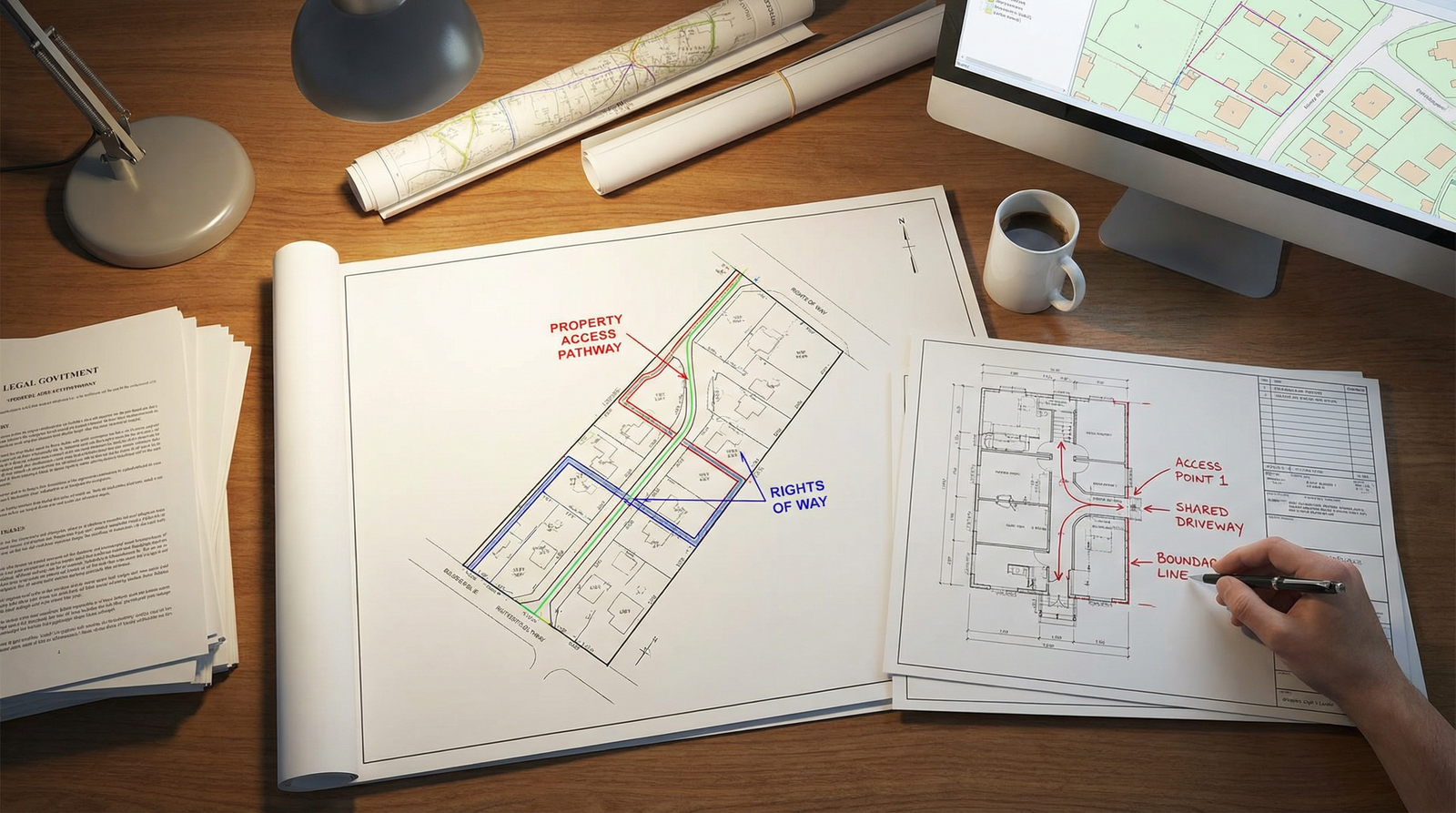
When people think about lease plans, they often focus on showing which flat or unit they're buying. However, rights of way and access points are equally important. If your lease plan doesn't properly document how you reach your property or what shared areas you can use, you might face problems later. As chartered surveyors, we ensure every lease plan properly documents all access rights and rights of way.
What Are Rights of Way?
A right of way is a legal right to pass over someone else's land. In property terms, this often means you have the right to cross shared or communal areas to reach your home or business. For example, if you own a flat on the second floor of a converted house, you have a right of way through the shared hallway and up the shared stairs to reach your flat door. You don't own the hallway or stairs, but you have a legal right to use them.
Rights of way can be simple (a hallway in a block of flats) or complex (a driveway serving multiple properties, access through neighboring land, or shared courtyards). Regardless of complexity, your lease plan must document these rights clearly.
Types of Access Rights
Pedestrian Access
The most basic right of way is pedestrian access – the right to walk to and from your property. This might include shared entrance halls, communal staircases, external paths through shared gardens, or walkways between buildings. Your lease plan should show every pedestrian route you're entitled to use, even if some are rarely used alternatives.
Vehicle Access
If your property includes parking, your lease plan must show how you reach that parking. This might involve shared driveways, rights to drive across communal areas, or access through private roads serving multiple properties. Vehicle access rights often come with restrictions – maybe only at certain times or for certain vehicle types.
Service Access
Properties need services – utilities, deliveries, waste collection. Service access rights ensure utility workers can reach meters and pipes, delivery vehicles can access your property, and waste collection services can function. For commercial properties, service access might be crucial for business operations.
Emergency Access
Fire escapes and emergency exits represent special types of access rights. These must be clearly documented because they affect building safety and insurance. If your flat has a fire escape through a shared area, that right of way is critical and must appear on your lease plan.
Why Access Documentation Matters
Legal Certainty
Your lease plan is a legal document. If a right of way isn't shown on the plan, you might struggle to prove you have that right. Years after purchasing, if a neighbor blocks your access route claiming you don't have rights to use it, your lease plan is your proof. Missing documentation means legal disputes and potential court cases.
Property Value
Properties without clear access rights are less valuable. If potential buyers can't be certain they'll have legal access to the property, they'll offer less or walk away. Proper documentation of all access rights protects your property's value.
Insurance Requirements
Insurance companies need to know about access arrangements. If your property has complex access through shared areas or across third-party land, insurers want this documented. Missing documentation can affect insurance validity or premiums.
Future Transactions
When you sell or remortgage, solicitors examine your lease plan. If access rights aren't properly documented, transactions can be delayed or complicated. Problems might not appear until you try to sell, by which time rectification is difficult and expensive.
Common Access Arrangements
Converted Buildings
When houses are converted into flats, shared areas like entrance halls, staircases, and landings are common property. Each flat owner has rights to use these spaces to access their flat. The lease plan must show these communal areas and make clear that all flat owners have rights of way through them.
Apartment Blocks
Purpose-built apartment blocks often have complex access arrangements. Residents might have rights to use entrance lobbies, lifts, corridors, staircases, underground parking access routes, and external paths through grounds. Every route must be documented, even alternatives that might rarely be used.
Shared Driveways
Many properties share driveways with neighbors. Your lease plan must show that you have a right of way along the driveway, even though you might not own it. If the driveway serves multiple properties, all owners need documented rights to use it.
Gardens and Outdoor Areas
Some properties include rights to cross communal gardens or use shared outdoor spaces. Perhaps you access your back garden through a shared side passage, or you walk through a communal courtyard to reach your flat. These outdoor rights of way need the same clear documentation as indoor access.
What Lease Plans Must Show
Clear Route Marking
Access routes should be clearly marked on lease plans. Often, surveyors use different colors or hatching patterns to distinguish access routes from areas you exclusively own and areas you have no rights to. The plan should leave no ambiguity about where you can and cannot go.
Start and End Points
Every access route has a start (usually a public road or building entrance) and an end (typically your property's private entrance door). The lease plan should show the entire route from public areas to your property.
Width and Dimensions
For some purposes, the width of access routes matters. Fire regulations might require corridors of certain widths. Vehicle access needs adequate width for cars or delivery vehicles. While general dimensions might be obvious from the plan's scale, critical dimensions should be clearly marked.
Shared vs. Private Areas
Lease plans must clearly distinguish between areas you own exclusively, shared areas where you have rights of way, and areas you have no rights to. This clarity prevents disputes with neighbors and ensures everyone understands their rights and responsibilities.
Special Considerations
Maintenance Responsibilities
Rights of way come with maintenance obligations. Usually, shared access areas are maintained collectively by all who have rights to use them, or by the freeholder with service charges covering costs. Your lease document will specify maintenance arrangements, and your lease plan should clearly show what areas are subject to these shared maintenance obligations.
Restrictions on Use
Some rights of way have restrictions. Perhaps vehicle access is limited to residents only, or certain routes can only be used during specific hours. While detailed restrictions appear in lease documents rather than plans, the lease plan should note where restrictions apply.
Emergency Access
Fire escapes and emergency routes must be clearly identified. Building regulations require certain properties to have secondary escape routes. If your property includes or relies on emergency access that differs from normal access, this must be documented.
Disabled Access
Modern properties must consider accessibility. If your property includes disabled access routes or adaptations, these should be shown on lease plans. For commercial properties, this is particularly important as accessibility regulations affect business operations.
The Surveyor's Role
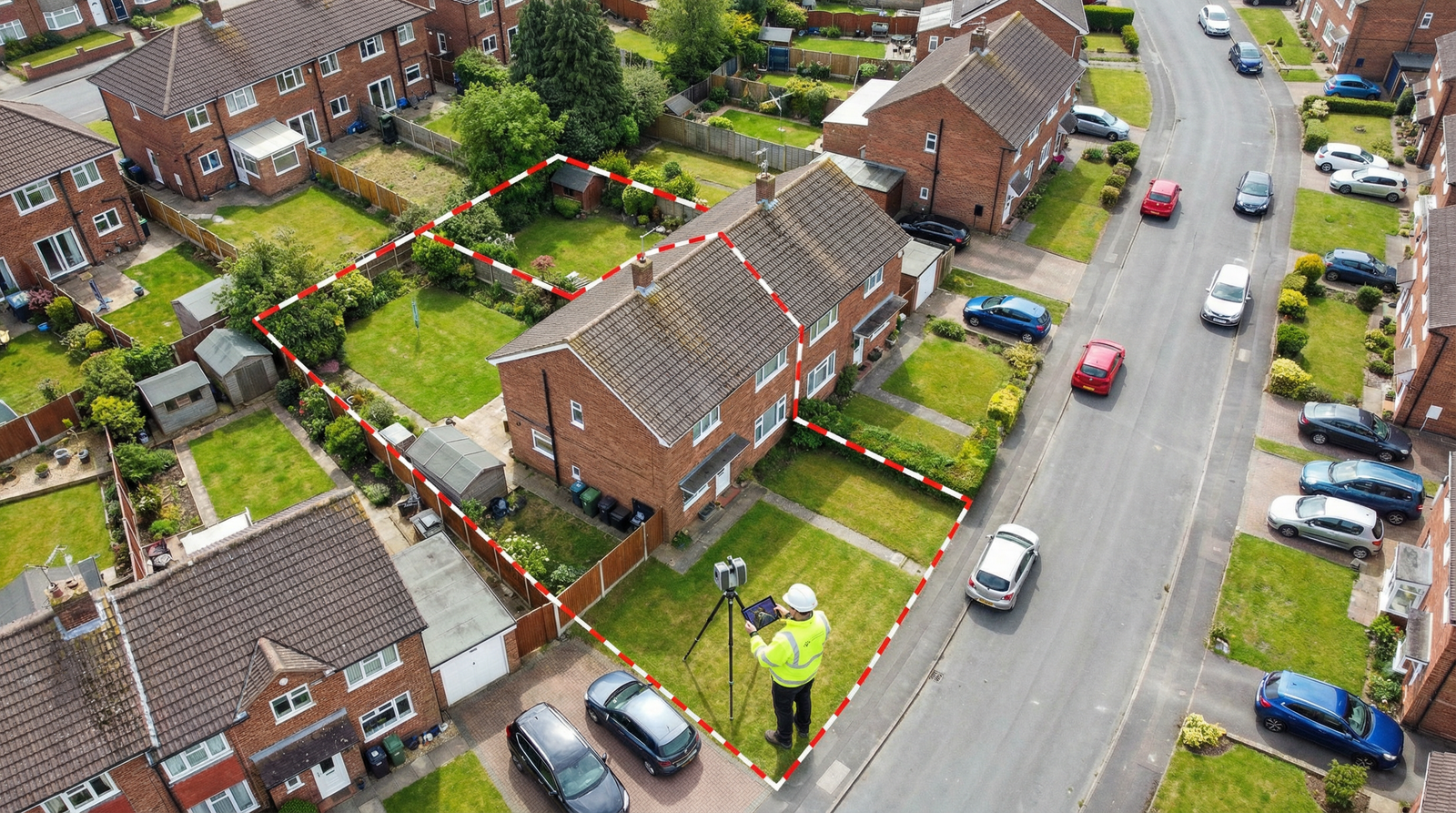
Professional chartered surveyors don't just measure rooms – they identify and document all access arrangements. During site surveys, we walk every route tenants or owners will use, photograph access points and shared areas, identify any restrictions or obstacles, measure width and dimensions where relevant, and note any maintenance issues that might affect access.
This thorough approach ensures lease plans include all necessary access documentation. We work from lease documents to ensure plans match legal rights, but we also observe physical conditions to confirm everything described in leases actually exists and is accessible.
Common Problems and How to Avoid Them
Incomplete Documentation
The most common problem is simply failing to show all access routes. Maybe an alternative staircase wasn't documented, or a back entrance was missed. Professional surveyors conduct thorough site inspections to ensure no access points are overlooked.
Ambiguous Markings
Sometimes lease plans show access routes ambiguously – lines that could represent boundaries or access routes, colors that aren't clearly explained, or hatching that doesn't distinguish different types of areas clearly. Professional plans use clear conventions and include legends explaining all symbols and markings.
Conflicts with Physical Reality
Occasionally, lease documents describe access routes that don't match physical reality. Perhaps a documented fire escape no longer exists, or described access crosses areas now occupied by later development. Good surveyors identify these discrepancies during site visits, allowing them to be resolved before lease registration.
Missing Emergency Routes
Fire escapes are legally required for many properties but sometimes aren't shown on lease plans. This can create problems with building control approval and insurance. Professional surveyors ensure all emergency access routes are properly documented.
Resolving Access Disputes
If access disputes arise, your lease plan is crucial evidence. A professionally produced plan showing clear access routes and rights of way provides definitive proof of your entitlements. Without clear documentation, resolving disputes becomes difficult and expensive, potentially requiring legal action.
This is why investing in professional lease plans from the beginning is so important. The few hundred pounds spent on proper surveying prevents thousands in legal costs later if access disputes arise.
Conclusion
Rights of way and access points are essential elements of compliant lease plans. They're not optional extras or minor details – they're fundamental to your property rights. Whether you're buying a flat in a converted house, a unit in a commercial development, or any leasehold property, ensure your lease plan properly documents all access rights.
Work with professional chartered surveyors who understand the importance of access documentation. Ask questions about what access routes will be shown on your plan. Review draft plans carefully to ensure every route you expect to use is clearly documented.
Your future self will thank you for insisting on thorough access documentation. When disputes arise, when you come to sell, or when you need to prove your rights, that comprehensive lease plan will be invaluable.
For professional lease plans that properly document all rights of way and access points, get in touch with our experienced team. We ensure your lease plan includes complete access documentation that protects your property rights.
Ensure Complete Access Documentation
Our chartered surveyors document every access route and right of way. Comprehensive surveys, clear plans, and protection for your property rights.
Commission Your Lease Plan